Meg Noble Peterson

Author of Madam, Have You Ever Really Been Happy? An Intimate Journey through Africa and Asia

SPRING CONTINUES WITH ITS PANOPLY OF VIBRANT AZALEAS AND LILACS, AND JUST THE RIGHT AMOUNT OF SUN….

This is the time of year when I don’t want to leave my home state. It’s just too beautiful, and the breezes are gentle and temperate as if teasing me into believing that Jersey heat and humidity are not just around the corner. Live in the moment is my motto. And this moment is divine!

May also brought the cancellation of two of my favorite Friday night television shows—the incomparable Bill Moyers Journal and David Brancaccio’s NOW. I can understand that Moyers wants to retire after years of investigative journalism, but I cannot understand why NOW is not continuing. Its carefully-researched exposes went deep into uncharted waters and uncovered problems that were dealt with nowhere else on television. And it showed some very innovative solutions from concerned individuals around the world. This, of course, is not always popular, but, for me, has been eye-opening. I’ve often mentioned some of the unusual programs presented by NOW and here’s another—a recent discussion with Josh Fox, an ordinary citizen turned documentary filmmaker, who won a special jury prize at the 2010 Sundance Film Festival for his film, Gasland, inspired when the gas company came to his hometown in Pennsylvania and offered him an exorbitant amount of money for his land.

This started Fox on a search throughout rural America to explore the effects of hydraulic fracturing (“fracking”) thousands of feet underground that, he discovered, endangers the purity of our water supply. Shockingly, there are plans underway which, if implemented, could severely compromise one of the purest of our water systems, that of New York City.

During his travels, documented in the film, Fox discovered these results of fracking: toxic streams, ruined aquifers, dying livestock, brutal illnesses, disastrous explosions, and kitchen sinks where water from the spigot burst into flames. Go to PBS.org and see for yourself how the oil and gas companies are causing the irreversible pollution of our drinking water.

The season ended for the Plainfield Symphony with a stunning performance of Verdi’s Requiem, conducted by Charles Prince, in conjunction with the Crescent Choral Society led by Ron Thayer. This will be my 50th season playing violin with the orchestra, but it takes a lot more practice these days to keep up with the demanding schedule. Thus, such activities as blogging are put on hold during the intense build up to each concert.

It has also been a great month for theater and opera. Some of the highlights are Shaw’s Candida at the Irish Repertory, Enron with the talented Norbert Leo Butz, Next Fall, a marvelously acted tragicomedy on Broadway, Strindberg’s searing drama, Creditors, directed by Alan Rickman at BAM, and Martin McDonagh’s wickedly funny Behanding in Spokane with the deadpan, super-funny, and brilliant Christopher Walken. I have to be honest and say that I was disappointed in Family Week by Beth Henley.


Opera included Rossini’s Armida with the flawless Renee Fleming, Der Fliegende Hollander (The Flying Dutchman) with the powerful Deborah Voigt, and a concert by the incomparable Shanghai Quartet in residence at Montclair State University.

Now, I’ve used up all my superlatives, except to say that I wish you all a glorious spring and a not-too-hot summer.


WITH THE AWAKENING OF SPRING MY HEART TURNS, ONCE AGAIN, TO TIBET

You may remember that I took a trip into the heart of Tibet with my eldest daughter, Cary, in the spring of 2004. After visiting Lhasa and various monasteries in the area, we drove inland and camped, mixed with nomads, and circumambulated sacred Lake Mansarovar, across the great plain of Barga at the base of the majestic Mount Gurla Mandhata. This and Lake Rakshas Tal are the highest bodies of fresh water in the world.

After attending the famous Saga Dawa Festival in Tarboche on June 3, my birthday, we headed up the holiest mountain in the Himalayas, Mt. Kailash (22,028 ft.) and over the 18,046 ft Dolma La, a difficult, but very satisfying trek to the rock-strewn and prayer flag-adorned top of the pass. There we placed remembrances of Christopher at the Bardo and the Tara rock. Circumambulating this mountain is an important pilgrimage for Hindus, Buddhists, and Jains. It was bitter cold as we climbed, and we set up tents along the way. But what amazed me was the number of Tibetan pilgrims who simply put down their blankets near the trail and slept out in the subzero weather.

M.P. and Cary on the shore of Lake Manasarovar

M.P. on top of the Dolma La (18,046 ft.)

Sacred Mt. Kailash

Leaving the Mt. Kailash area

A very powerful, distant memory

Moving onto the Tibetan plain

Typical landscape above tree line

M.P.. with playful monks at Sakya Monastery

Nomad selling cheese

One of many clear aqua lakes on our high altitude journey

Monks debating Buddhist scripture at Sera Monastery

M.P. and Cary on the roof of the Jokhang Temple, built in 647 AD

Tibetan woman in Lhasa

Selling wares in Lhasa

Transportation in a rural village

I’ve written a lot about the Tibetan people and their courage. I’ve visited and supported students at the schools in Dharamsala and Suja, India, where children, many of them orphans who escaped over the mountains to freedom, find a new beginning. And I’ve attended two weeks of the Dalai Lama’s lectures at the Namgyal Monastery in Dharamsala. And now, once again, tragedy has struck the Tibetans, this time in the form of a devastating earthquake which leveled the city of Kyeku on the Chinese/Tibetan border. Although reports are that it is in northern China, it is really in the Tibetan region of Kham, which my daughter, Cary, visited in 2007.

The earthquake was 100 miles from the monastery of her Tibetan Buddhist teacher, Kilung Rinpoche. Monks from the Kilung Monastery are now in Kyeku with Tibetan food for those who have lost everything in the quake. This is direct aid being brought straight to those in the greatest need.

http://www.kilung.org/pages/projects/disaster-relief.htm

I imagine that most of you know of this disaster, but please spread the word. If people want to help, this is as immediate and direct as it gets, organized by people Cary and I know personally.

Since I wrote the above, there is even more information about the wonderful work being done for the survivors in Kyeku. I’ve been getting emails about a new program of providing yaks to the families who have lost everything. It was just launched a few days ago and is explained on the Kilung Foundation website. www.kilung.org Individuals and groups are encouraged to purchase these animals, which also saves the animals from slaughter and provides the families with nutritious milk products so necessary for their diet. For more information about this YAKS FOR EARTHQUAKE RELIEF program, write to: Rigdzin Chodron at [email protected], located in Langley, Washington. This is a dedicated friend who can give you a chance to participate in this practical program of lasting and sustainable help for these families.

For those of you who want to see more photos of the campaign to help the people of Kyegu, visit Kilung’s flickr sites below:

http://www.flickr.com/photos/kilung/sets/72157623795609117/

http://www.flickr.com/photos/kilung/sets/72157623822601097/

Most of my photographs from this 2004 trek were taken before I had a digital camera, but there are a few from friends and from Cary that I would like to share with you. We visited many more temples and monasteries than are pictured here and we were careful not to photograph the people who indicated that it was a breach of their privacy. This is totally understandable, but limits our description of the richness of the experience.

Nomads tending their fields

The boy and the yak

Plowing the fields

The octagonal Kumbum Stupa, which houses 70 chapels and has six levels, and is part of the Palkhor Chode Monastery in Gyantse

Sermon Square, Tashilhumpo Monastery, Shigatse

Monk fetching water

Every temple has many levels. M.P. emerging from a meditation room

Decorated rocks near Drepung Monastery, Lhasa

Decorate rocks near Drepung Monastery, Lhasa

Courtyard of the Jokhang Temple, Lhasa

The thirteen-story Potala Palace, Lhasa, complete with tourists

The road winding through the mountains to the Nepalese/Tibetan border

RITES OF SPRING a la MAPLEWOOD, NJ

One day after saying goodbye to winter at Harriman State Park, I awoke to a paradise of flowering trees and bushes. And this is just the beginning! The maples, dogwood, and azaleas are right behind. Too bad there were so many telephone and electric wires spoiling some of these views, but we’re still lucky to have so much beauty lining our city streets.

Forsythia flanking the golf course

Lush magnolias...here today, gone tomorrow

Those gorgeous magnolias! Here today, gone tomorrow….

As we move into a new season, here is a theater update for all my like-minded addicts around the world.

To celebrate this season of renewal, I enjoyed a stunning production of Hamlet at the Met, an opera by Ambroise Thomas, the 19th century French composer. Outstanding performances were given by the English baritone, Simon Keenlyside, and the Canadian soprano, Jane Archibald.

At the end of February I played in an all-Russian concert with The Plainfield Symphony, featuring music by Prokofiev and Shostakovich, playing his 5th symphony, my favorite.

Yes, I was able to get tickets for the last two segments of Horton Foote’s The Orphans’ Cycle at the Signature Theater. This was theater at its very best and I hated to see it end. After the first segment I had an interesting exchange with the actress, Sarah Jessica Parker, who stopped me as I was leaving, having mistaken me for one of the actors (surely not the ingénue, I quipped).

Another fine play by Susan -Lori Parks was The Book of Grace at  the Public Theater. We were treated to an hour-long discussion with her and several cast members after the performance.  I had been lucky enough to see her Pulitzer price winning hit, Topdog/ Underdog several years ago.

The Pearl Theater at the City Center presented a fabulous adaptation of Hard Times by Charles Dickens. It always amazes me when six people can play a plethora of characters, changing on a dime right in front of you.

Another excellelnt production at the Minetta Lane Theatre was 4Play, The Flying Karamazov Brothers, doing their usual hilarious, off-the-wall juggling, dancing, miming, and singing. I don’t know when I’ve laughed so much.


And finally, I was blown away by the richness and versatility of the Broadway musical, Fela!, conceived and choreographed by Bill T. Jones, and based on the life of the Nigerian singer from the late ‘70’s, Fela Kuti.

Keep tuned. There’s more just around the corner and yes, there are those travel rules. I haven’t forgotten. They’re compounding!

One final note: People ask me how I keep climbing and traveling without the usual aches and pains of age. I’ll tell you how. First of all, it’s that three-mile walk everyday, but more than that, I do Hanna Somatic exercises, taught to me by several practitioners, including my daughter, Martha Peterson. I’m so lucky to have her close by for sessions and classes. For those who are having knee, back, neck, or shoulder problems (too much computer?), I suggest that you visit her blog, which is full of great tips, videos, and photos to help keep you strong, playful, and on-the-go. What more can you ask? Just go to the website and see for yourself. www.essentialsomatics.com

And while you’re at it, do sign up for my RSS feed at the top of the page. Then you’ll automatically get my blog.

SPRING IS COMING TO HARRIMAN STATE PARK, SO PUT ON YOUR HIKING BOOTS….

I want to share with you the last day of winter climbing as the temperatures unexpectedly soared to 80 degrees, catching these winter tableaus unaware. In just one day the laurel is starting to blossom and the maple and dogwood buds have appeared. But you can see by the following pictures that the woods of New York State were still transparent, mysterious, and barren, and the slabs of granite free of foliage. I can’t wait to return and show the unfolding of spring.

We trudged through numerous swollen streams

The rocks on the Red Dot trail

One of the many abandoned iron mines from the Revolutionary War

A lone survivor of the harsh winter storms

Nature's haunting designs

With Bernard, the photographer, at Harriman's answer to Times Square, a confluence of trails

Water, water everywhere....

MYANMAR IS BACK IN THE NEWS, BUT DON’T BELIEVE EVERYTHING YOU READ

It seems impossible that twenty-one years have gone by since Daw Aung San Suu Kyi, the Nobel laureate, who won an overwhelming victory (82%) in the elections of 1990, was put under house arrest by the Junta, which failed to recognize her election as the head of the National League for Democracy and future prime minister. To this day the repressive military dictatorship still rules with an iron fist. This past summer Suu Kyi’s house arrest was extended until after the upcoming elections this spring. And just today the National League for Democracy disbanded and refused to participate in the elections, saying that to do so would be to renounce the validity of the last democratic election, something that would undermine their dignity and nullify everything they’ve stood for all these years. As you can imagine, this raises questions about both the future of the Burmese opposition and the credibility of the upcoming vote.

Recently, The New York Times had reported signs that a change is coming to the beleaguered people of Myanmar, but only on the junta’s terms. I have my doubts about any real change, from other sources that tell of the continued persecution, torture, and incarceration (under the worst possible conditions) of 2100 dissidents since the peaceful uprising by Buddhist monks in 2007.  This information is widely available on the Internet and I urge you to read it.

Something I had not realized is that during her arrest, Suu Kyi was also awarded the Sakharov Prize for Freedom of Thought in 1990. She used her Nobel Peace Prize money (1.3 million US Dollars) to establish a health and education trust for the Burmese people.

As you know, I spent almost four weeks in Myanmar in January of 2007 and reported about these friendly, welcoming people, who are living under such tyranny and deprivation. I did not dare write to those I met, however, nor mention their names on this blog for fear of reprisals due to their association with me, a Westerner.

Here are some pictures that will give you an idea of a country I hope to revisit at the end of this year. I start at the famous Kandawgyi Gardens that James Wilson and I explored when coming back from a visit to Thipaw in the mountains, reached by going on the train over a notoriously high tressle that nearly scared me to death. The gardens were designed by the English at the beautiful Hill Station of Pyin oo Lwin.

First are some shots of the orchids, then the flower gardens and birds:

The military is everywhere

The next pictures were taken on the all-day boat ride from Mandalay to Bagan

Children playing along the riverbank

Standing in the water and selling to the passengers

Business as usual

Fields of flowers everywhere

Family picnic

Now the Day is Over….

A HIGHWAY TO ANNAPURNA. WHAT’S NEXT? AN ESCALATOR UP MT. EVEREST….

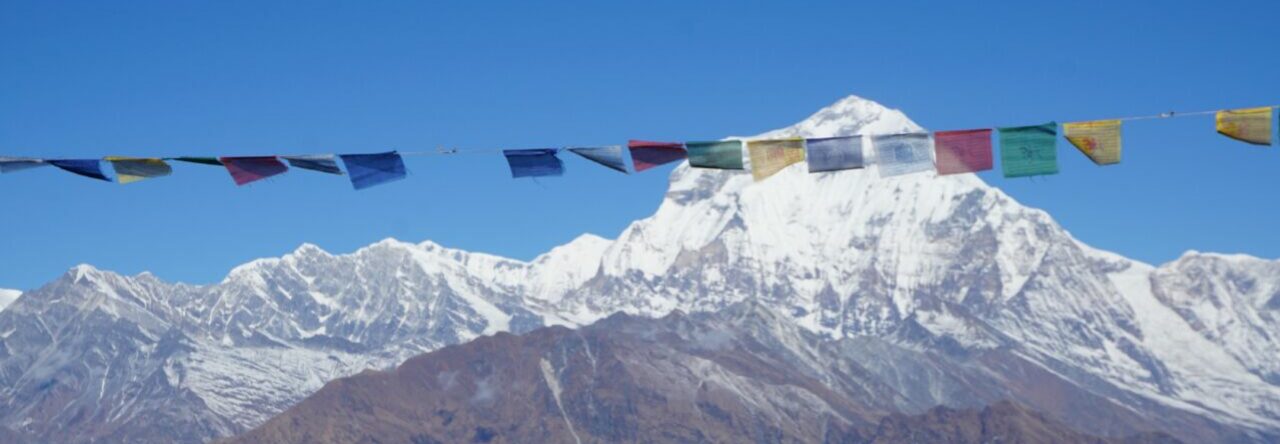
Many of you, like me, read in the Travel Section of the NYTimes this week that they’re building a road into the beautiful Annapurna Circuit, which I traversed in 1999.  Here is the link if you wish to read it. The lead photo is exactly like one I took on Poon Hill facing the  magnificent 26,795 ft. Dhaulagiri peak.

http://travel.nytimes.com/2010/03/21/travel/21nepal.html?ref=travel

I must say, at the risk of sounding like a curmudgeon, that I’m glad I laid eyes on Nepal and on Kathmandu, and trekked into Annapurna, Kangchenjunga, and Everest Base Camp before it turned into an out-of-control haven for tourists. Those were the days when you went there to be IN the mountains, not just to look at them from a jeep. There were the broken-down buses with their hangers-on that labored over treacherous mountain passes to get you to a trailhead, and there were well-worn trails to get you into the wilderness. You struggled, you huffed and puffed, and you grooved on the excitement of a possible snowstorm as you climbed up the Thorong La (17,500 ft) at 3 AM and ran down the other side like a mountain goat, so relieved to have made in over the top and survived.

M.P. on top of Thorang La

The only way you got to Muktinah, the Kandiki Valley, Manang, Chame, or Tatopani was on foot, just as the Nepalis did. This was even more so on the difficult 30-day Kangchenjunga trek where you could look down on the Jannu Glacier from Kampachen and risk a “yak attack” from thundering mountain herds at sunset. Sometimes our small group walked on paths the width of a single foot, tamped into the side of mountains, right after the original trail had been washed out by an avalanche of falling rocks. We walked through isolated villages and used the footpaths of the locals. We slept in our own tents, since there were no public teahouses at that time (1996). We made friends with local policemen and children and grandmothers. It was joyous! We felt part of Nepal, not an isolated group of tourists.

As Ethan Todras-Whitehill, the author of the disturbing  Times article put it: Trekkers want places where only their own feet can take them.

Here, just for old times sake, are some of my happy memories of Annapurna and the pristine Himalayas in days of yore.

Typical bus heading for the mountains

The Annapurna range lies ahead

One of many footbridges over the Kali Gandaki River

The gate through which we leave Chame

Trails leading to the pass

Here's what happens when there is no bridge. Let me tell you...it's cold!

Yours truly outside of Pisang, before the pass

One of many stone stupas. Stones are intricately fitted together without cement

A typical trail near the Kali Gandaki River

The wilderness outside Hongde

Morning friends. Herds of goats and sheep blocked the trail

Children greeting us along the way. Nameste!

Children greeted me with Namaste and took me to their home

Tibetan mother and child in the valley refugee village

Tibetan woman with her child, living in the valley. This was her first photo, she told me.

Kalu, our wonderful guide

Mani stones under the prayer wheels

M.P., Kalu, and Denise kicking up our heels on Poon Hill

M/P., Kalu, and Denise kicking up our heels on top of Poon Hill

Dhaulagiri from Poon Hill

Sacred Jwala Mai Temple in Muktinah

The leader of the pack. Move over!

This delightful schoolboy walked several miles with me to his school, practicing his English

We arrived at the school

Terraced farms

Leaving Manang

Leaving Manang and heading for Thorong La (the pass)

Typical landscape as we descended

Typical scenery as we descended
Neat farms and villages spread out below us

Young women working in the field

After the "Gurung Staircase" we reach our final camp, Birethanti, where the porters are playing a heated card game

A morning and evening shot of the magnificent fish-tail peak of Machhapuchhare

Morning and evening shots of the magnificent fish-tail peak of Machhapuchhare

DO WE HAVE TIME TO BE COMPASSIONATE THESE DAYS?

This question was asked by Eric Daniel Metzger, the director of a new film, Reporter, (HBO documentary, premiered Feb. 18) about how the writer and NYTimes op ed columnist Nicholas Kristoff finds his stories in the heart of the Congo, honing in on one individual at a time, whose suffering is so great that it outrages the reader enough to inspire action. I saw this interview on David Brancaccio’s excellent program, NOW (Feb. 12).

We are living at a time when the daily news is so horrific that we’re shutting down to tragedy and settling into a kind of psychic numbness, finding it more and more difficult to think or care deeply about people and issues that are half a world away.

Kristoff and Sheryl WuDunn have written a book, Half the Sky, which deals with violence toward women worldwide and what women are doing to turn their despair into prosperity. Many of the solutions in poverty-stricken and war torn Congo are being initiated by courageous and determined women against all odds; women who have suffered through the worst fighting since WWII, been repeatedly raped, their children kidnapped, their homes destroyed. This devastation has lasted seven years with more than four million dead. I recommend that you read this disturbing, powerful , and inspirational book.

When David asked what we can do to help the people suffering in this war, the answer came: “Figure out what moves you most and take your own path. Look on line under Congo Crisis/Help.” I did this and the first thing that came up was Women For Women International. My eyes were opened. There are so many things we can do.

Nicholas Kristoff and Sheryl WuDunn are speaking at my high school alma mater, Emma Willard, in Troy, NY, on Feb. 23rd. Last year at this time I wrote about Greg Mortenson’s presentation at the same venue. I congratulate E.W. on introducing their students to such important world issues.

EVERYBODY IS TALKING ABOUT SNOW, SO WHY SHOULD I BE DIFFERENT?


The only difference I can think of is that I was the only person on cross-country skis I encountered during my five-mile circuit between my daughter Martha’s house and mine. It was a veritable blizzard, so maybe they passed me in the white out.  And oh, it was so beautiful! You know, winter wonderland and all that, with eight inches of snow weighing the evergreens down so you had to duck beneath a canopy as you glided by. The roads hadn’t been fully plowed (one pass a winter does not make…or something like that) and if a lone car or a plow happened by I simply dived into the nearest snow bank. On one occasion, coming back in the dark and wearing my headlamp, a plow came within two inches of me. Scary. I can still move fast when my mortality stares me in the face.

I know, this is child’s play compared to Washington, DC, but it was also manageable, for which I’m grateful. Here is my proof.

Isn’t this just like life?

First you’re up….

Then you’re down. And so it goes…

For some videos of this perfect day, go to Martha’s blog, which you can find on her website: www.essentialsomatics.com She has some really good ideas for exercise in a snowstorm.

Hat’s off to my grandson, Adam Bixler, 17, who is the tympanist and percussionist for the Youth Orchestra of Essex County, which toured Austria last summer. He performed on drums Saturday night at the Hat City Kitchen in Orange, NJ, sitting in for a couple of numbers with my son-in-law, Gary Shippy’s, band, Walk The Dog. It was a swinging evening all around.

Interesting tidbit: Orange is called Hat City because it was the manufacturing center for Stetson hats in bygone days. Surely some of you out there remember Stetson hats.

For those of you who love opera, let me recommend the recent HD performance from the Metropolitan Opera of Bizet’s Carmen, starring the stunning Elina Garanca as Carmen and the masterful Roberto Alagna as Don Jose.    It’s being shown in specified theaters around the country and is the most superb Carmen I’ve ever seen. Acting, singing, staging. It’s another flawless production by Richard Eyre. See it if you can.

60’s REDUX

Are you tired of winter? Do gray days and freezing temperatures make your bones creek? Well, lighten up, throw off the gloom, and kick up your heels the way you did during those glamorous, carefree days of yore…the irrepressible 60’s.

My daughter, Martha, attended a party, dressed like Judy Carne from Laugh-In, that great comedy show from the late 60’s and early 70’s. She was the perfect “sock it to me” girl, using my old Barbie bubble wig, which she said resembled road kill after getting it out of the children’s dress-up box, and one of my classic frocks, waiting in line to be sold on e-Bay. The orange wooden necklace, incredibly ugly earrings, and boots are also mine. Authentic, or wot? See…it pays to be a pack rat!

Feast your eyes on my beautiful baby. And enjoy reminiscing.

Sock it to me!

It’s been awhile since I gave you a theater update, so here goes. I enjoyed Carrie Fisher in her one-woman show, Wishful Drinking, and a new play by the always-challenging David Mamet, Race, but the highlight of the season for me was Part 3 of Horton Foote’s magnificent trilogy, The Orphan’s Cycle at the Signature Theater.I look forward to seeing Part 1 and 2 before it closes. I don’t know any other playwright who has captured the voice, dreams, and sorrows of everyday Americans like Foote. He will be sorely missed.

Old friend, Carol Goodman, paid us a visit from her new home in Williamstown, MA, and we spent a delightful evening at the theater. We enjoyed Donald Margulies’ new play, Time Stands Still with an excellent acting ensemble led by Laura Linney, Eric Bogosian, and Brian D’Arcy James, and finished up with the hilarious Love, Loss, and What I Wore by Nora Ephron and her daughter, Delia. Carol and I wear our theater addiction well.

I haven’t forgotten Rule 6 for intrepid travelers. Tune in next time….

HAVE TALENT, WILL TRAVEL….

Jen Vitello is one enterprising young woman! Studying at the College of Design, Architecture, Art, and Planning within the University of Cincinnati, she specializes in Graphic Design and has had five internships, one of which was print design for Christie’s Auction House in New York City. But this was not enough for Jen. She wanted to travel, to understand different living conditions and cultures, and to design in a way that would improve the lives of others. Enter Global Vision International, an organization specializing in conservation projects and critical humanitarian initiatives. Jen volunteered for an expedition in Kenya and spent three months (from October to December) working on environmental and community development programs in the villages of Shimoni, on the coast, Mkwiro, on Wasini Island, and Kidong, bordering Tsavo West National Park. In fact, on clear days in Kidong, she had a view of Mt. Kilimanjaro, where I was a year ago.

Her team lived under all kinds of conditions (mostly rural and very elemental) and learned to respect the traditions of dress and the devotion to prayer in the Moslem communities. They worked with local men and women in their conservation efforts, educating them on the benefits of environmental sustainability. In the coastal Shimoni Forest, they conducted behavior studies on the Angolan Black and White Colobus Monkey and worked to develop forest walks that would promote eco-tourism and be run by the local community.

Through a partnership with Kenyan Wildlife Society, her team also did research on marine mammals (such as Bottlenose Dolphins, Humpback Whales and Green Turtles) in the surrounding Kisite-Mpunguti Marine Park. They studied the impact on marine life caused by the increase in tourism, helping to ensure that it does not become destructive to the dolphin population. This was an eye-opener to me, who thought it was OK to swim with the dolphins on my last trip to New Zealand. I now see the effect this can have on such marine animals.

Aside from working on the East African Coast, Jen got the opportunity to travel to Tsavo West National Park and work with elephant ex-poachers. The sustainable livelihood projects she assisted with revolved around the creation of a local cultural center, and included the design of large information panels, restaurant menus and packaging for handmade crafts.

The creativity that emerged when working alongside the local villagers was most inspiring to her as a designer, and made a lasting impact on her perception of the design process.

Having returned to Cincinnati to finish her last semester of school, Jen is eager to apply what she learned from her travels in her work. She has a new understanding of the Moslem communities where she lived, as well as the needs of the men and women in these communities. To supplement these observations, she’s taking classes in Swahili, as well as Conservation and Economic Development in the Third World.

Most importantly, however, her strongest ideas have been validated: that designers have the power to change the quality of life around them. Essentially, they are problem-solvers and can use their creative ingenuity to make sustainable designs, which are useful in the everyday lives of people everywhere.

To follow the progress of Global Vision International’s projects, check out their blog: http://gvikenya.blogspot.com

Enjoy these pictures from the three locations where Jen worked.

Walking to Funzi

Jen settling into a mud hut in Kidong

Mwiro Beach cleanup

Photographing dolphins

On the lookout for dolphins. Surveying for boats and dolphins

Painting, varnishing, and dusting information panels

Showing off information panels

Participating in tug-of-war with local children

Studying the butterflies

Photographing the butterflies

Using a panga to clear paths in the forest

GVI volunteers with local villagers


Page 23 of 33

© 2026 Meg Noble Peterson